Shelagh's Lens
Bringing Vancouver and the world to inspired travellers
Round and Round

… we go, looking down over a staircase that was, for me, the highlight of the building in which it’s encased. Known as the Snail Staircase, the Spiral Staircase and as the Momo staircase, I think of it simply as Practical Art.
Giuseppe Momo’s two staircases, built during the Great Depression, dance together in what’s known as a double helix – a symbol that has subsequently, with scientists’ identification of the double helical DNA strand, come to symbolise life itself.
Share this post, and Shelagh's Lens, with others who love to travel

Old Vancouver

… which is, of course, a relative term. Yes, I’m back to playing with reflections again, and hope you enjoy the juxtaposition between the old and the new. In this case, the old is championed (albeit in a reflection warped by angles) by the Fairmont Vancouver, known to those of us who grew up here as the Hotel Vancouver.
The Hotel Vancouver is yet another of the grand hotels built by Canada’s railway lines; construction began under the auspices of the Canadian National Railway, but eleven years, one Great Depression and collaboration with the Canadian Pacific Railway all factored in before the hotel opened in 1939, at a cost of $12 million … the price of some single family homes in Vancouver these days.
Share this post, and Shelagh's Lens, with others who love to travel

Downtown Totems
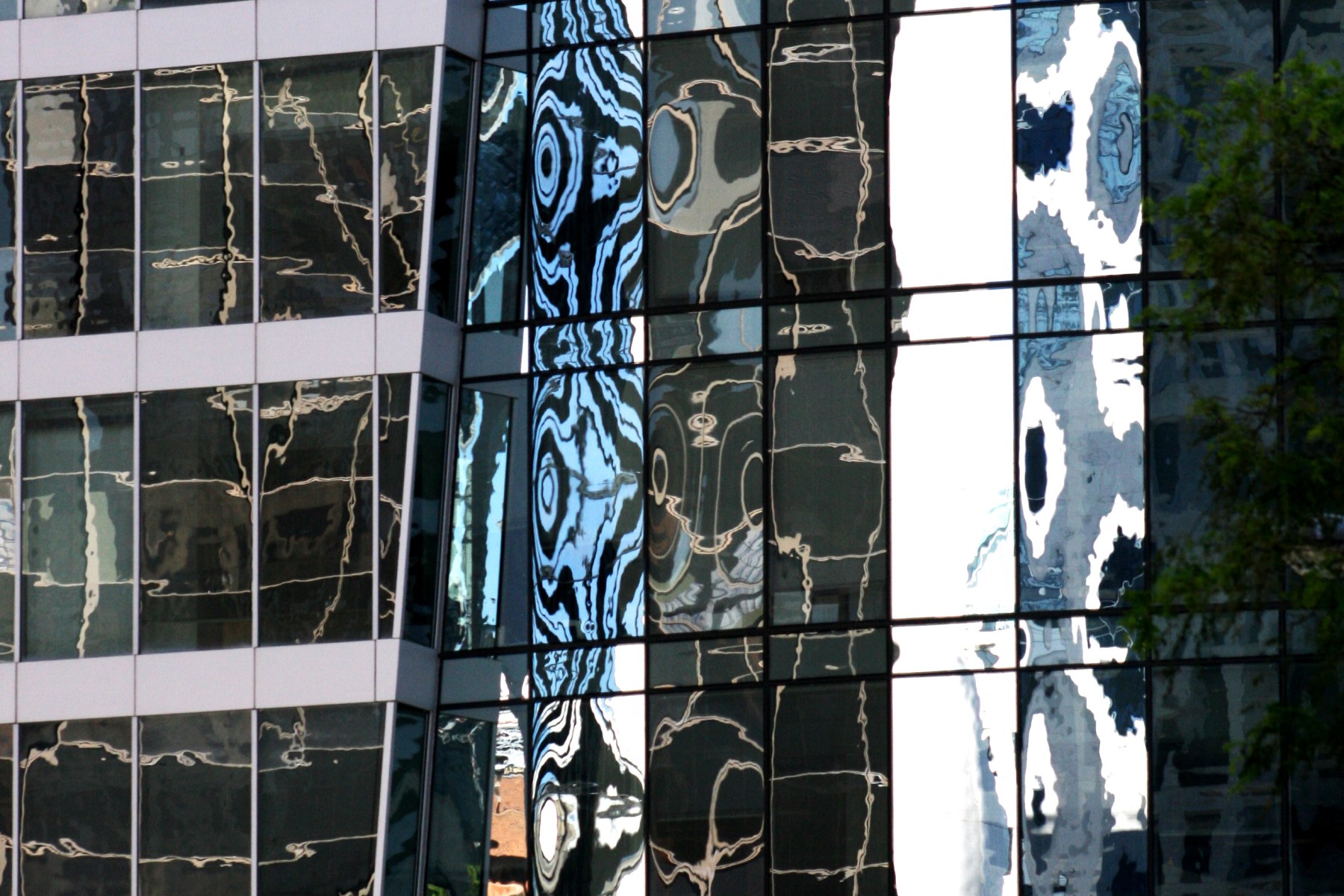
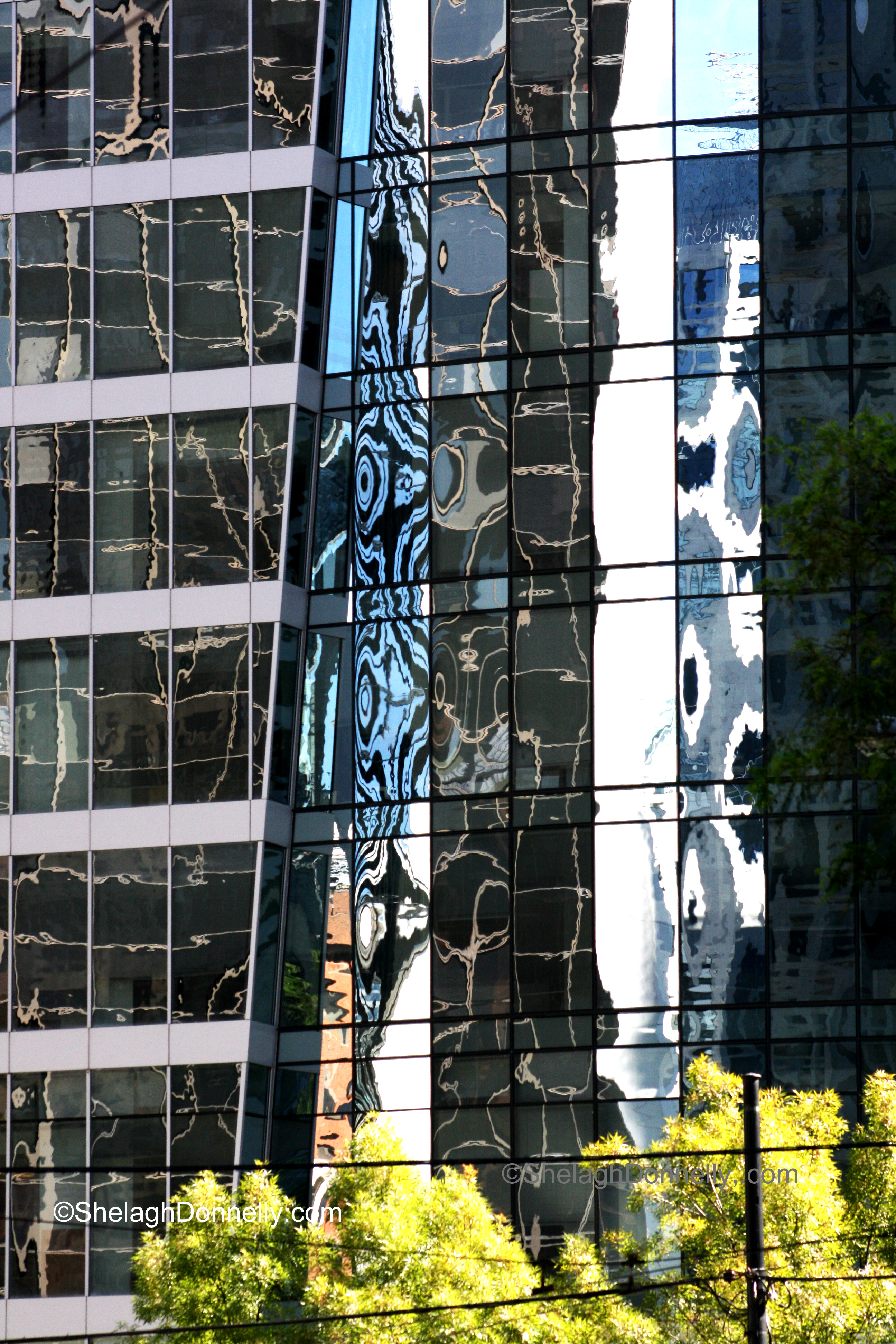
Lately I’ve brought you images ranging from a totem pole near Lions Bay to the clock tower of an older building in Montreal. Today, I’m relying on modern Vancouver to bring you another take on reflective capacities. Rather than a shop window this time, here we have one of the tall glass buildings that’s typical of downtown Vancouver.
The angles of this building lent themselves nicely to capturing reflections from assorted buildings nearby, with the effect that – to my eyes – the buildings reflected between the right angle on the left side of the image, and the greenery at the right, offer a contemporary totem effect.
Share this post, and Shelagh's Lens, with others who love to travel

Sculptured Trees

… or, a steel and glass roof designed to emulate rows of trees, whichever you prefer. This was the vision Portuguese architect Santiago Calatrava executed in designing Lisbon Oriente Train Station, known to locally as Lisboa Estacion Orient.
Expositions often serve as impetus for major construction projects that impact a city long after the fair is gone. The first of Vancouver’s SkyTrain lines was built in time for Expo 86, which also opened investors’ eyes to real estate values in what is often deemed one of the world’s most livable cities. As mentioned alongside an earlier image taken at San Diego’s Balboa Park, that property received enormous attention and underwent vast improvements – including the construction of buildings that now form an integral part of that city’s history – for 1915’s Panama-California Exposition.
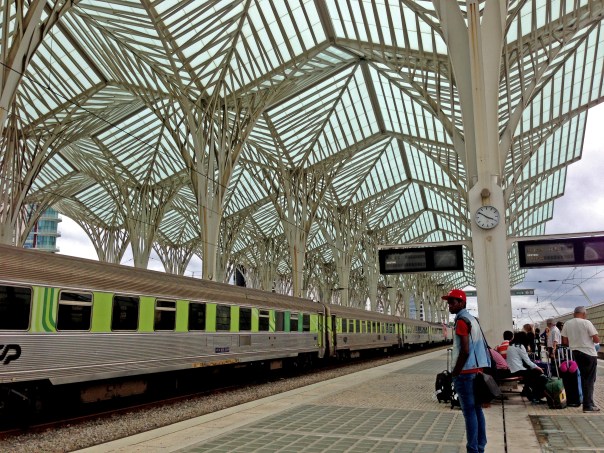
Here in Lisbon, the train station is a legacy of Expo 98, and a successful one at that. One of the world’s largest train stations, with eight platforms and 75 million passengers annually, it’s comparable to New York City’s Grand Central Station. We also found Lisbon Oriente to be clean and efficient, and enjoyed travelling between Lisbon and Porto from this gallery of sculpted trees.
For more images and insights on this traveller’s time in Lisbon, you may want to have a look at my other site, Exceptional EA.
Share this post, and Shelagh's Lens, with others who love to travel

Not-So-Rapid Transit
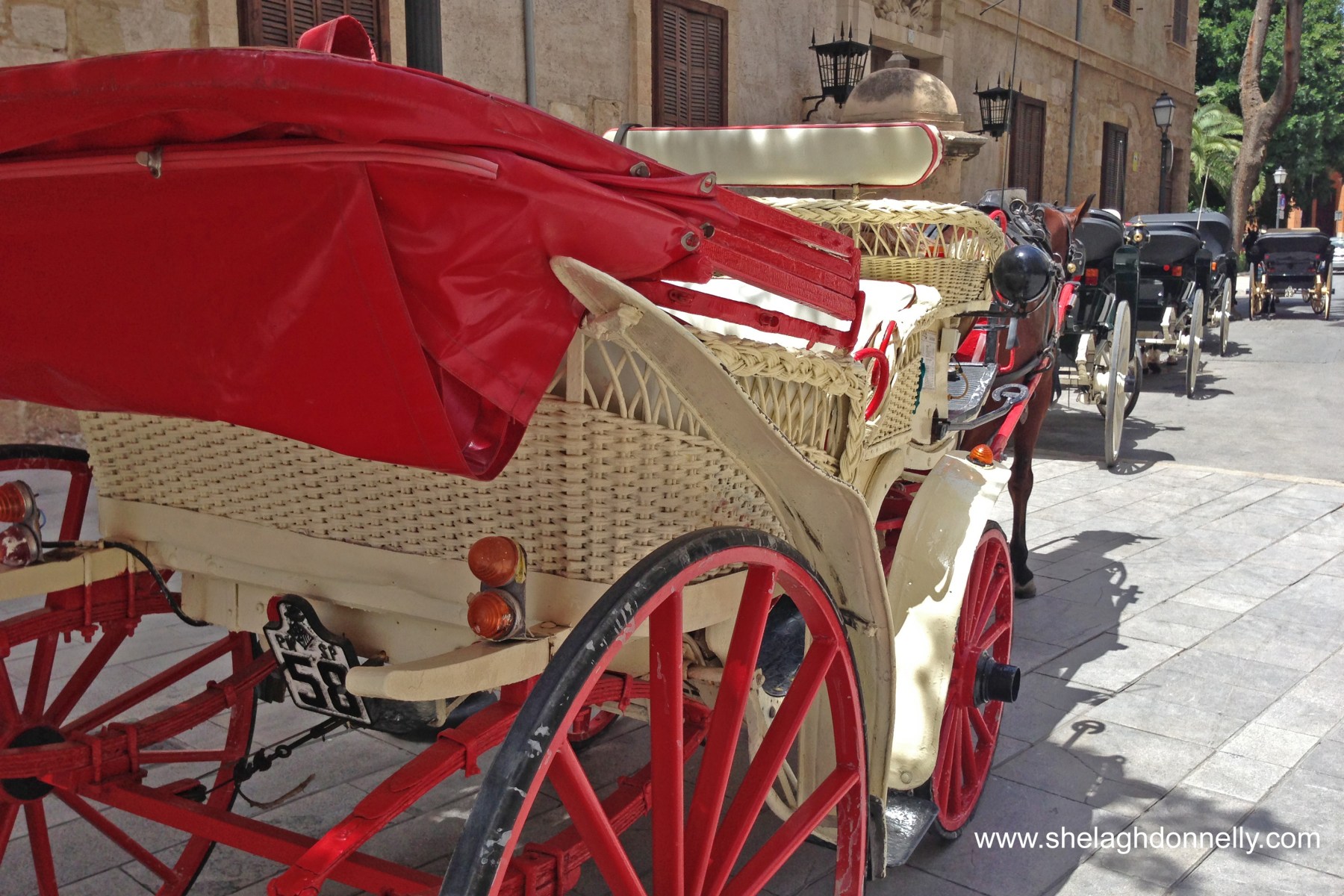
Ah, the romance of a horse-drawn carriage ride. In Seville. Sounds romantic, yes?
Planning a not so long ago trip to New York City, I had the misguided notion of planning a carriage ride through Central Park. Speaking with an NYC acquaintance about her observations and perspectives on treatment of the horses, though, rid me of any such desire.
Others may have better insights than this writer as to practices in other cities and countries. Right or wrong, glimpses in some older cities we’ve travelled in Europe offer a perception of animals generally less festooned in plumage, and travelling less crowded streets than are found in some large cities.
Approaching our hotel entry the night we arrived in Seville, we were both struck by the beauty of a wedding party passing the hotel. Dusk was falling, and it was like something out of a fairy tale. It was difficult to know where to let your eyes rest longest: we had the happy and attractive young couple, with the bride in a stunning gown, riding in an elegant carriage with four even more elegant matching greys (light silver, actually) clip-clopping down the cobblestone road at a steady pace. The young couple’s future was awaiting them, though; blink, and all were gone.
Unable to leave you that particular image in any way except your mind’s eye, instead let’s leave you with this one, a line up of carriages at the ready, in Palma de Mallorca.
Share this post, and Shelagh's Lens, with others who love to travel

Tick, Tock
When you’re a Canadian living in a relatively new city such as Vancouver, there’s appreciation to be had for visiting older locales. I’ve yet to visit two of our oldest cities, St. John’s, Newfoundland and Quebec City, Quebec, but have explored a bit of Montreal. A village known to locals as Hocelaga when Jacques Cartier explored the area in 1535, change was afoot seven years later, with the arrival of Europeans settling in to this newer land. Blink, and a century later, in 1642, the city was formally established as Ville Marie.
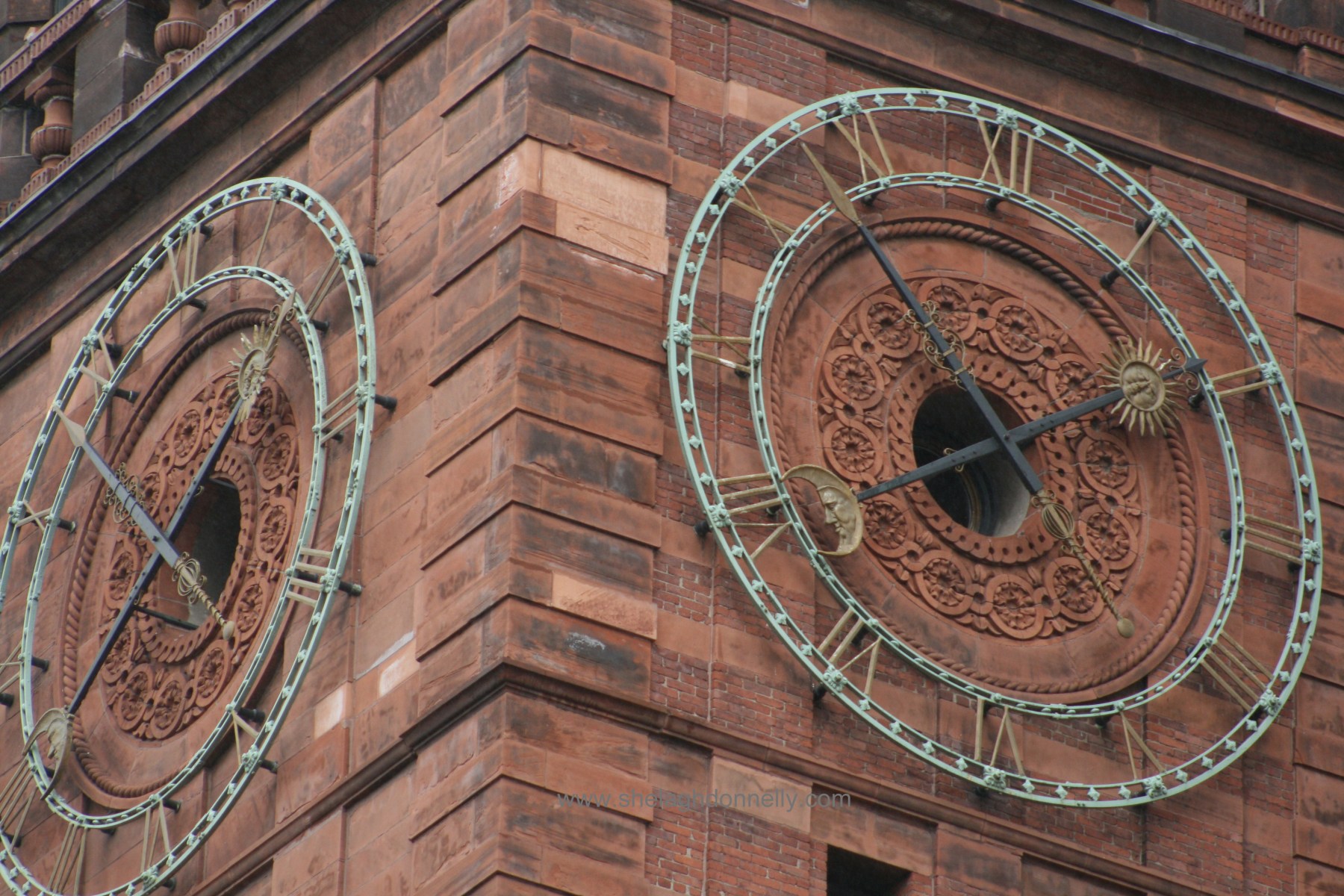
A stay in Old Montreal logically leads one to Notre-Dame Basilica, which fronts Place d’Armes. Coming from the old quarter’s primarily light stone buildings, my eyes landed on the lovely red building this clock tower caps. The New York Life Building, otherwise known as the Quebec Bank Building, is crafted of red sandstone imported from Dumfriesshire, Scotland. Completed in 1889 at a cost of $750,000, this represented the city’s highest commercial building – aided in no small part from the clock tower, which added another three stories to the structure – and housed the city’s first elevator.
Share this post, and Shelagh's Lens, with others who love to travel

Eclipse
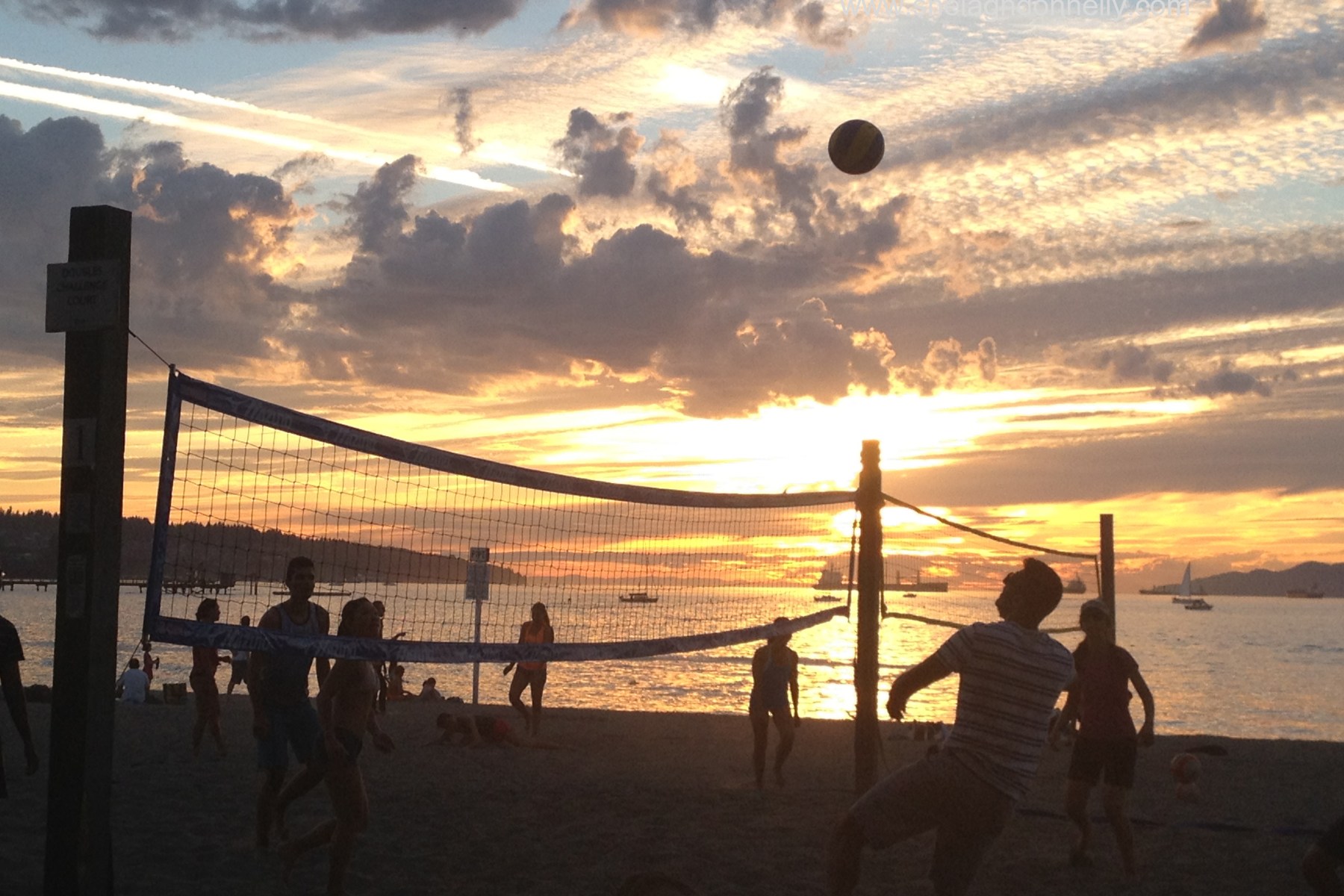
Summer in Vancouver is winding down. This is Labour Day weekend, traditionally marking last-chance visits to the Pacific National Exhibition (“Win a house! Win a car!” … and enjoy my favourite, the roller coaster!), back-to-school shopping and excitement about the new school year for the young ones, even as families eke out the last remaining days of summer vacation.
While a strike and labour issues have created uncertainty this year as to when public school students will actually resume studies, college and university students and other young adults – such as those here at Kits Beach – find ways to temporarily eclipse such matters. Instead, they’re nabbing every last minute of daylight to enjoy the sun, sand, great company and athleticism all ’round them.
Share this post, and Shelagh's Lens, with others who love to travel

Water Garden
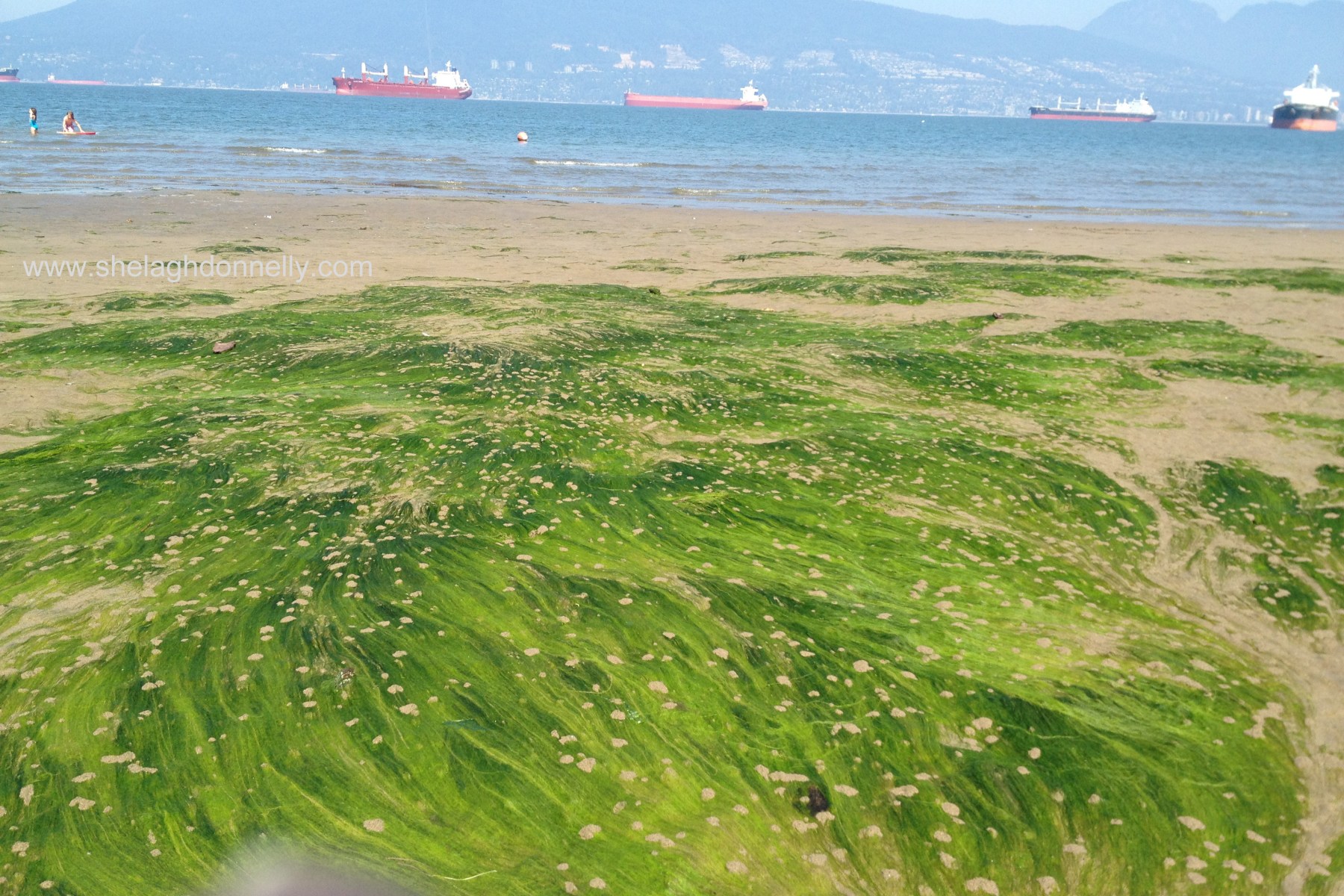
When the tide is out on a sunny afternoon, bare feet will thank you for the sensations to be had stepping out on the sand. Step past the waterfront logs, slip through temporary rivulets and splash your way through tidal puddles – and enjoy the silken gardens on lovely display at Spanish Banks.
Share this post, and Shelagh's Lens, with others who love to travel

He Had A Dream

If you have the opportunity to travel to Washington, DC, a tour of the monument and memorials is inspirational. I believe that evening tours lend enhanced gravitas and impact by virtue of dramatic lighting on the granite, marble and other structures.
The Martin Luther King, Jr. Memorial, dedicated on August 28, 2011- 48 years after Dr. King’s March on Washington for Jobs and Freedom – is just such a breathtaking example. Dwarfed by the statue, visitors come to this site, no doubt chosen for its proximity to the ground on which Dr. King delivered his “I Have A Dream” speech. Carved into the granite walls, you’ll find 16 quotations from Dr. King’s pursuit of freedom, and there’s quiet drama in the statue, which levels a steady gaze across the basin to the monument honouring Abraham Lincoln.
Share this post, and Shelagh's Lens, with others who love to travel

Alhambran Meditation

Quiet. Contemplation, or emptying of thoughts, whichever is best suited to the day.
Difficult as it may be to imagine solitude amidst fellow travellers visiting Granada’s Alhambra Palace, it can be had, as seen here in the gardens. Beauty at the Alhambra extends beyond the walls and tiles, and this is but one example.


 Shelagh's Lens