Shelagh's Lens
Bringing Vancouver and the world to inspired travellers
Among the Leaves

 The canopy of trees along this stretch of road makes for a gorgeous Spring show. When I paused there today to capture this shot, I remembered that I’ve been meaning to share word of a local university student who’s using his creative talents to help introduce music lessons and instruments to children from low income families.
This winter, Vancouver student and musician Jacob Saltzberg approached me to ask permission to use one of my photos – a photo I took on a crisp autumn day along this same stretch of West 10th. Over the last two or three years, I’ve received requests from other Fine Arts students to use my photography as the basis for pieces they were creating for class or personal projects. I appreciate the respect these young artists demonstrate for others’ copyrighted work, and have been happy in such instances to give the green light.
This approach was different. While he was also working on a school project, Jacob’s project was an album that he planned to release online. The music on his then-upcoming Traffik album was a nostalgic exploration of change and perspective. This innovator planned to encourage music lovers to buy individual tracks or the full album, whichever they chose, at whatever price listeners want to name. Jacob asked for permission to use one of my autumn photos of this streetscape for the cover of his album, Among the Leaves.
 Jacob wasn’t creating the album for personal profit, though; he’s dedicating 100% of the album’s proceeds to St. James Music Academy. The Academy is, as you’ll see on Jacob’s site, “… a non-profit organization in Vancouver’s Downtown Eastside that provides music lessons and instruments for children from low-income families.”
You can learn more about Traffik by clicking here, and you may want to listen to some of the music from Among the Leaves by clicking here.
As we turn the page on another weekend in which devastating, irreversible and senseless harm was done to innocents, I think it’s helpful to also acknowledge the good around us. Whether it’s twenty-somethings raising spirits and donations at the One Love Manchester concert, twenty-somethings using their talents to help others, or individuals of any age simply being kind to friends and strangers, here’s to the good in the world.
Share this post, and Shelagh's Lens, with others who love to travel

In the Gallery
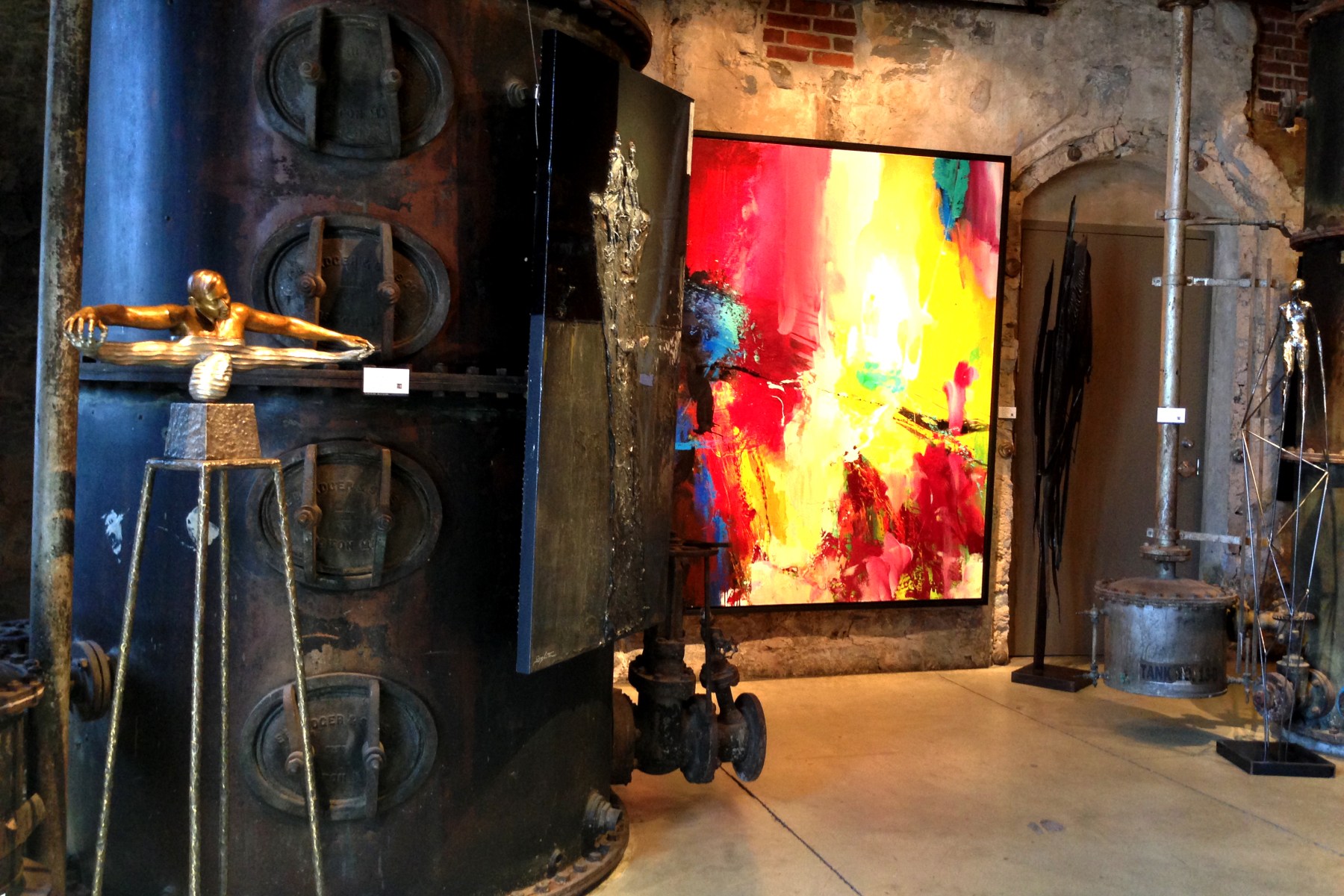

In Toronto’s Distillery District last month, I appreciated a number of pieces in the Thompson Landry Gallery’s Cooperage Space … and all the more so when juxtaposed, as with these pieces, with the exposed brick and with (perhaps original?) fixtures such as those you see in this historic building.
Share this post, and Shelagh's Lens, with others who love to travel

Pedalling through the Blossoms
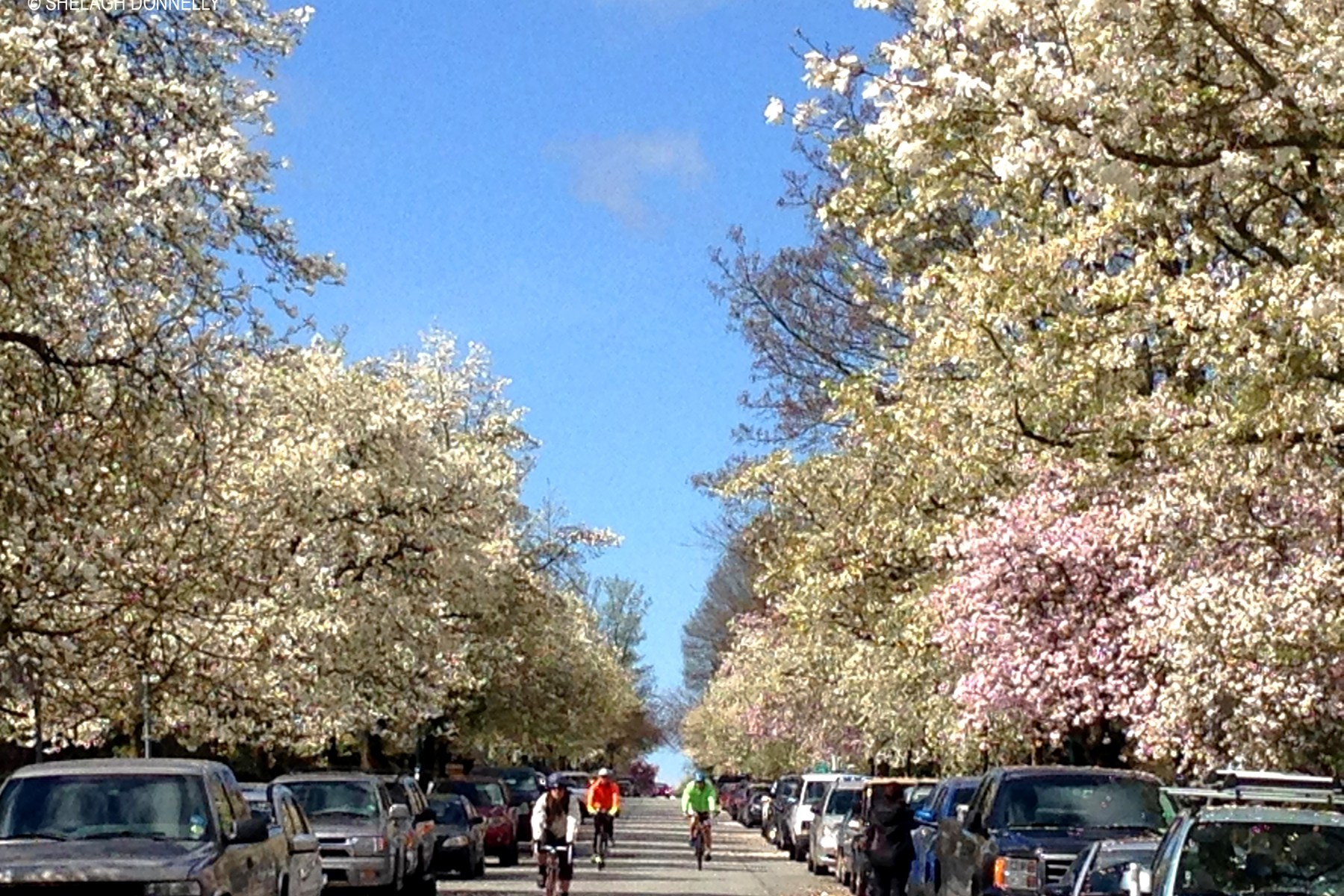
It’s Spring, and you’ll find some beautiful blossoms at Vancouver’s Kits (Kitsilano) Beach. While you’re at the beach, take a bit of a walk and you’ll find an entire block of blossoms.
Just a block or two up the road from Cornwall, between Yew and Vine, you’ll not only find a rack of bikes for the City’s bike share program, you’ll also find this jaw-dropping display of blossoms.
 A bonus? As the bike rack would suggest, this is a bike-friendly route!
Share this post, and Shelagh's Lens, with others who love to travel

Return of the Herons

The herons are back! The Pacific Great Blue Herons, that is.
I laugh, thinking about just how bemused my 20-something (or even 30-something) self would have been to think that this would be a big deal to me, but it is. Approximately a third of the globe’s blue herons live in our region and, while I took all these photos at Stanley Park this afternoon, you’ll also see herons at Jericho Park and Spanish Banks.

There, when the tide is out, you’ll see herons fishing in the shallow waters off the beaches, and they’re graceful in flight.

… most of the time!

I’ve commented lately about the challenges of having an actual winter in Vancouver this year, and it seems that also delayed the herons’ return. They settled in to nest about three weeks later this year than in either of the last two years.

This colony is in Vancouver’s Stanley Park, and is considered one of the largest on the continent. Our local birds have about a hundred nests in this particular colony …

… and hatched 138 youngsters here last year. That’s good news, since the great blue herons are considered at risk in this country.

When I arrived at this colony today, it was a grey, dull day and so the first photos appear as though they’re taken in black and white.

Not so. That’s Vancouver under cloud. However… the clouds drifted away, and you can see the incredible change a half hour or so can bring.

These nests are close to English Bay, in Vancouver’s West End.

Every few minutes, you’d see a bird emerging from the cluster of trees and make a broad sweep (often toward the water) before returning with another twig for the nest. It turns out that it’s typically the male who does most of the twig collecting.

Some nests were noisier than others, and what I originally mistook for aggression is apparently all part of the herons’ courtship ritual.

According to the Cornell Lab of Ornithology, the fluffing of feathers and beak-bashing (properly known as “clapping” their bills) were all just part of a few pair of birds settling in to their 2017 nests.
Here’s to a great year ahead for the herons and their fledglings! If you’d like to watch their progress, you’re in luck. Herons are known to have nested in this area for 96 years now, and Vancouver’s Park Board has a heron cam that enables you to check in on the members of this partiular heronry. Click here to check it out.
Share this post, and Shelagh's Lens, with others who love to travel

Sure Signs of Spring
Those in snowier climes will scoff at this, but we’ve had a tough Winter in Vancouver.
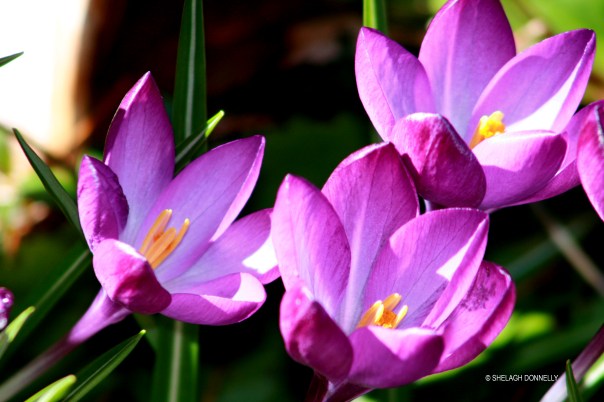
For starters, we’ve actually had snow.
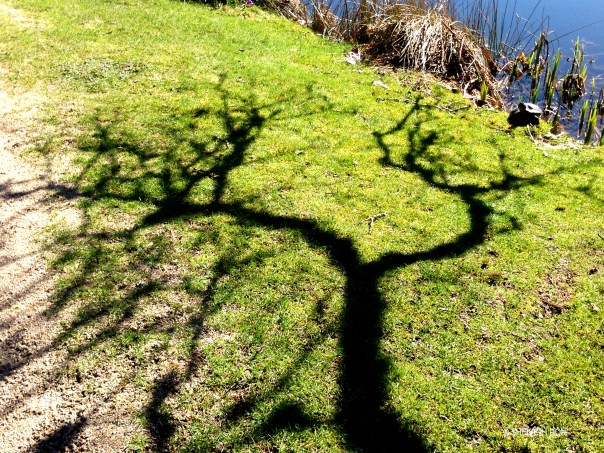
On multiple occasions, and not solely on the mountains.
However, that’s given way lately to rain in the city.
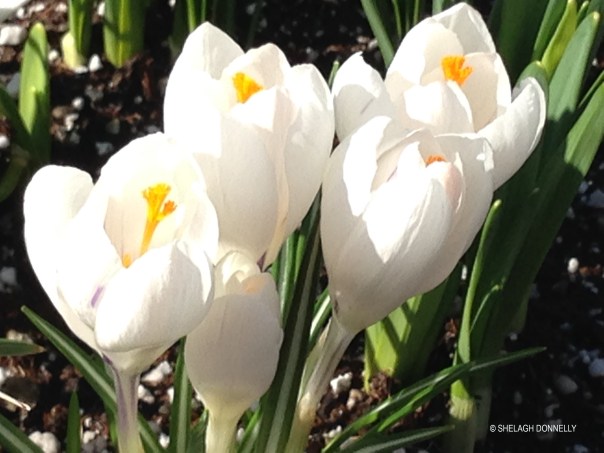
… and, this weekend, to some actual sunshine.
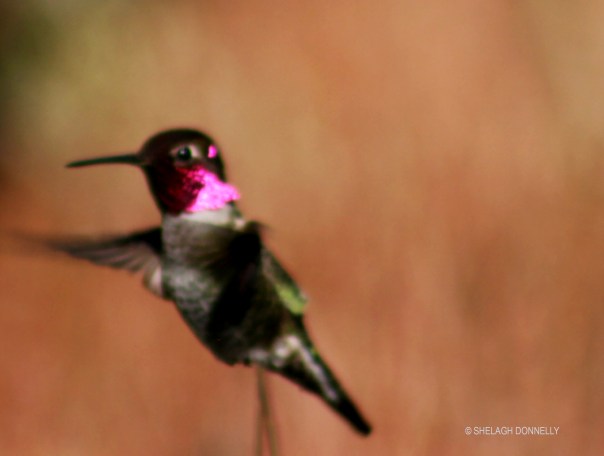
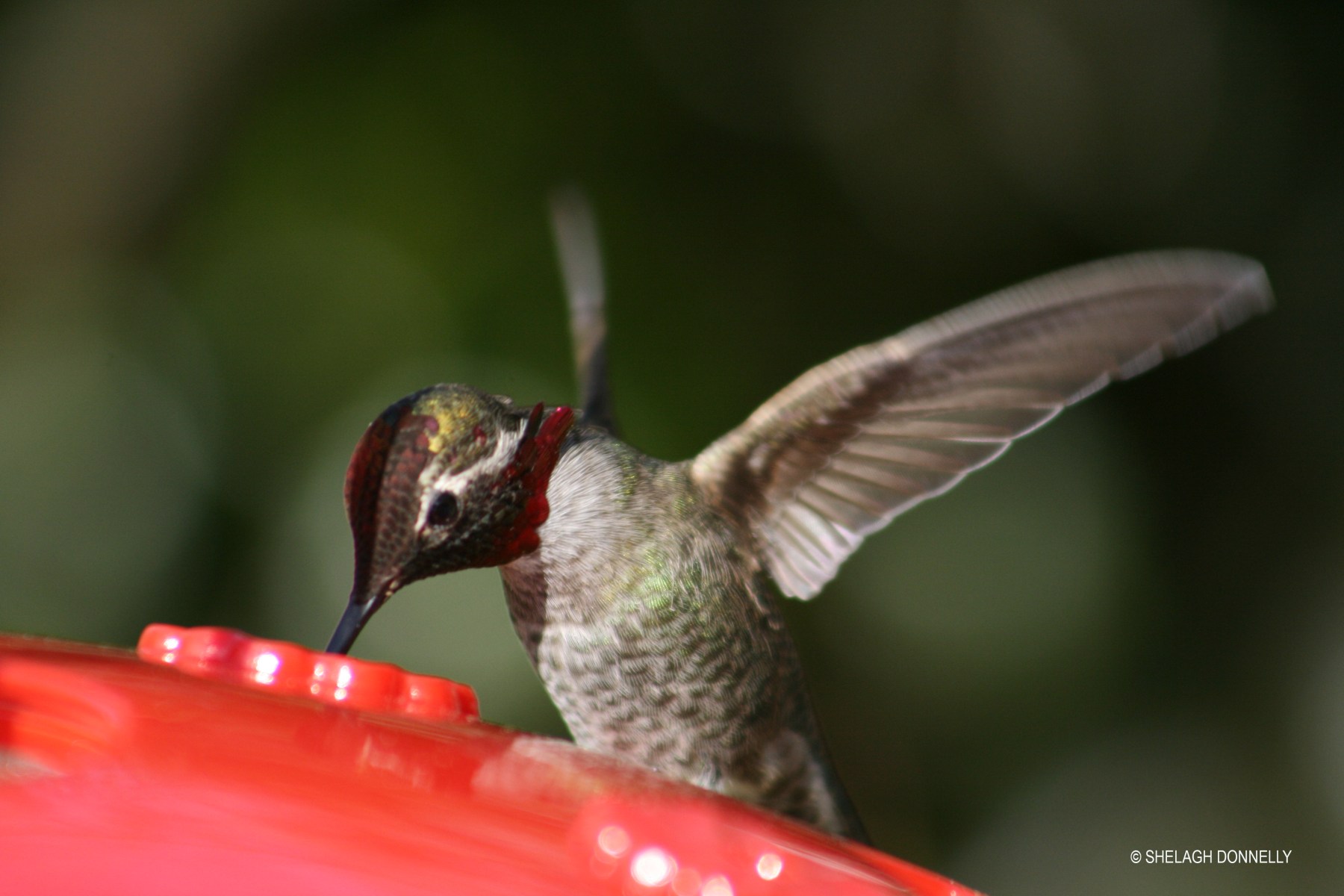
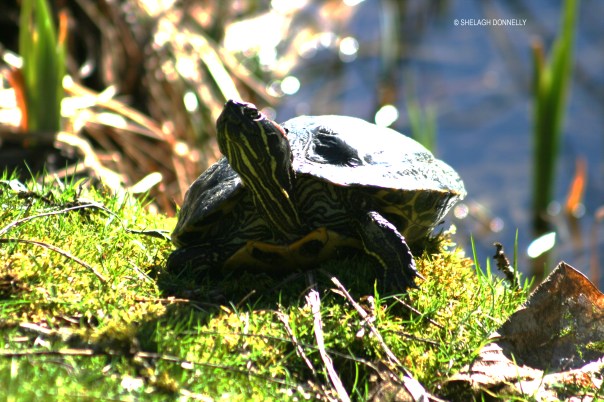
I’ve seen hummingbirds outside our windows as early as February this year, but they – and the turtles – were out in force yesterday at Van Dusen Botanical Garden.
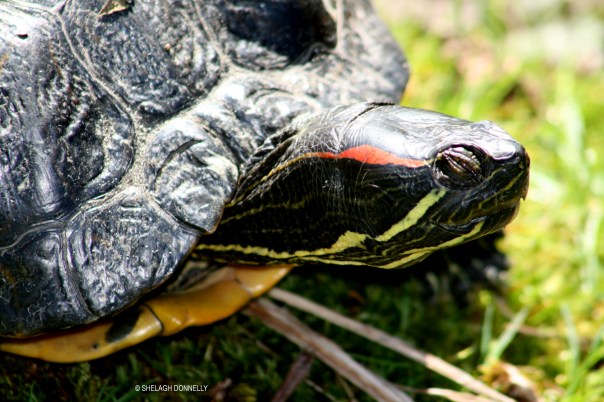
With Spring just a couple of days away, the turtles were not fully ready to come out of their shells …… but they were definitely sunning themselves.
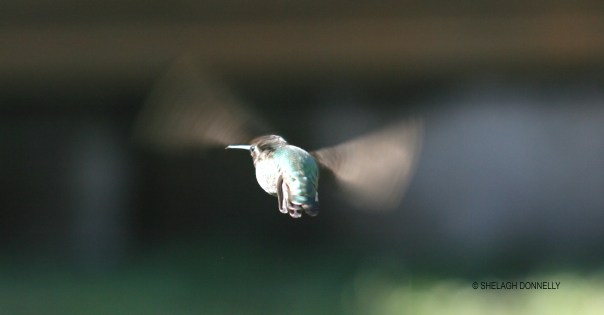
I felt fortunate to have caught this wee hummingbird in flight. Look at those wings in motion!
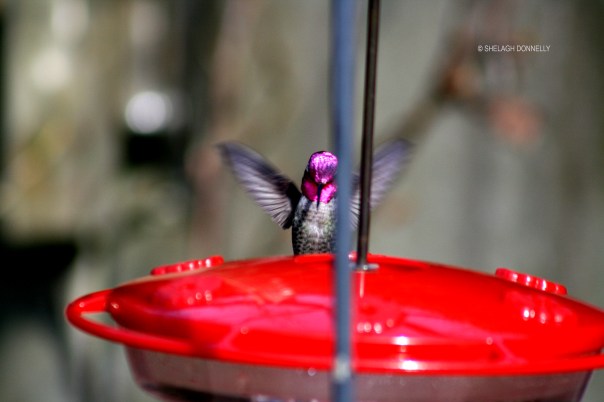
It was enroute to joing others who were also flitting to and from feeders, delighting passersby.

If you’d ever like a study in contrasts, imagine the length of some of the camera lenses focused yesterday on these tiny birds. Call it lens envy or whatever you like but I suspect that, collectively, the value of some of the nearby cameras and lenses yesterday would likely have amounted to a hefty down payment on our first house!
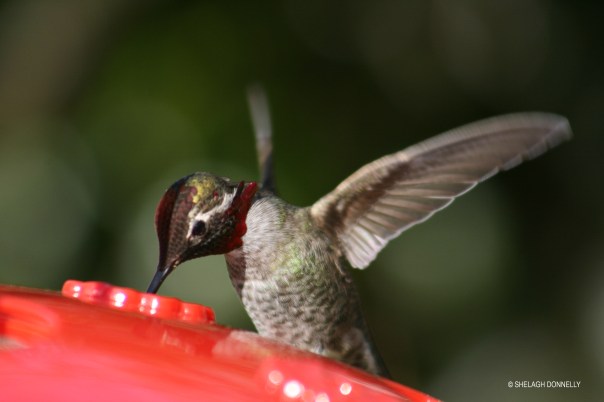
Back to the birds, now: Their tiny size is deceptive. If you have hummingbirds nearby, you’re likely to hear them before you see them.
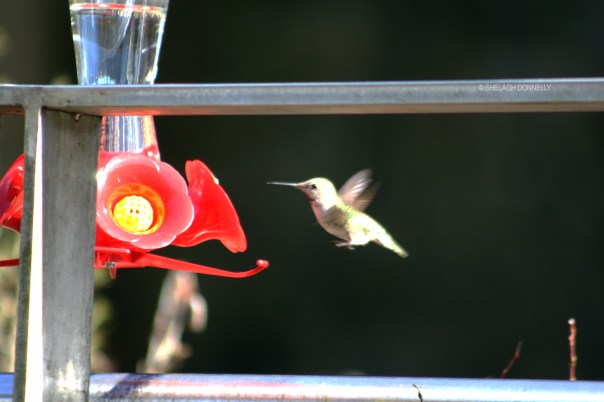
That’s because they flap their wings so very quickly – I’ve read that they’ve been recorded at 200 beats a second – that they generate a buzzing sound.
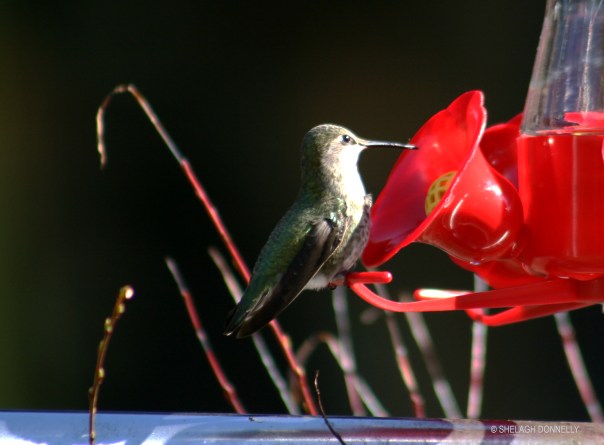
It’s also fascinating to watch their variations in flight. Have you ever seen a hummingbird fly vertically? I did yesterday, as one of these sweets flew directly up at least 18 feet in the air. They’re able to move like elevators – straight up and down – as well as forwards and backwards because of their bone and muscle structure.
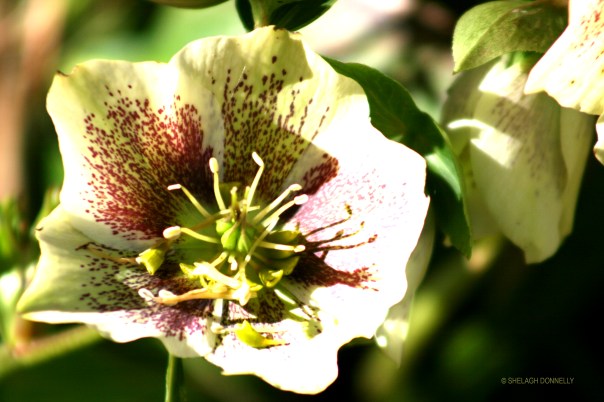
Whatever their talents, I’m always grateful for their visits, and for Spring’s arrival.
Share this post, and Shelagh's Lens, with others who love to travel

Unmasked
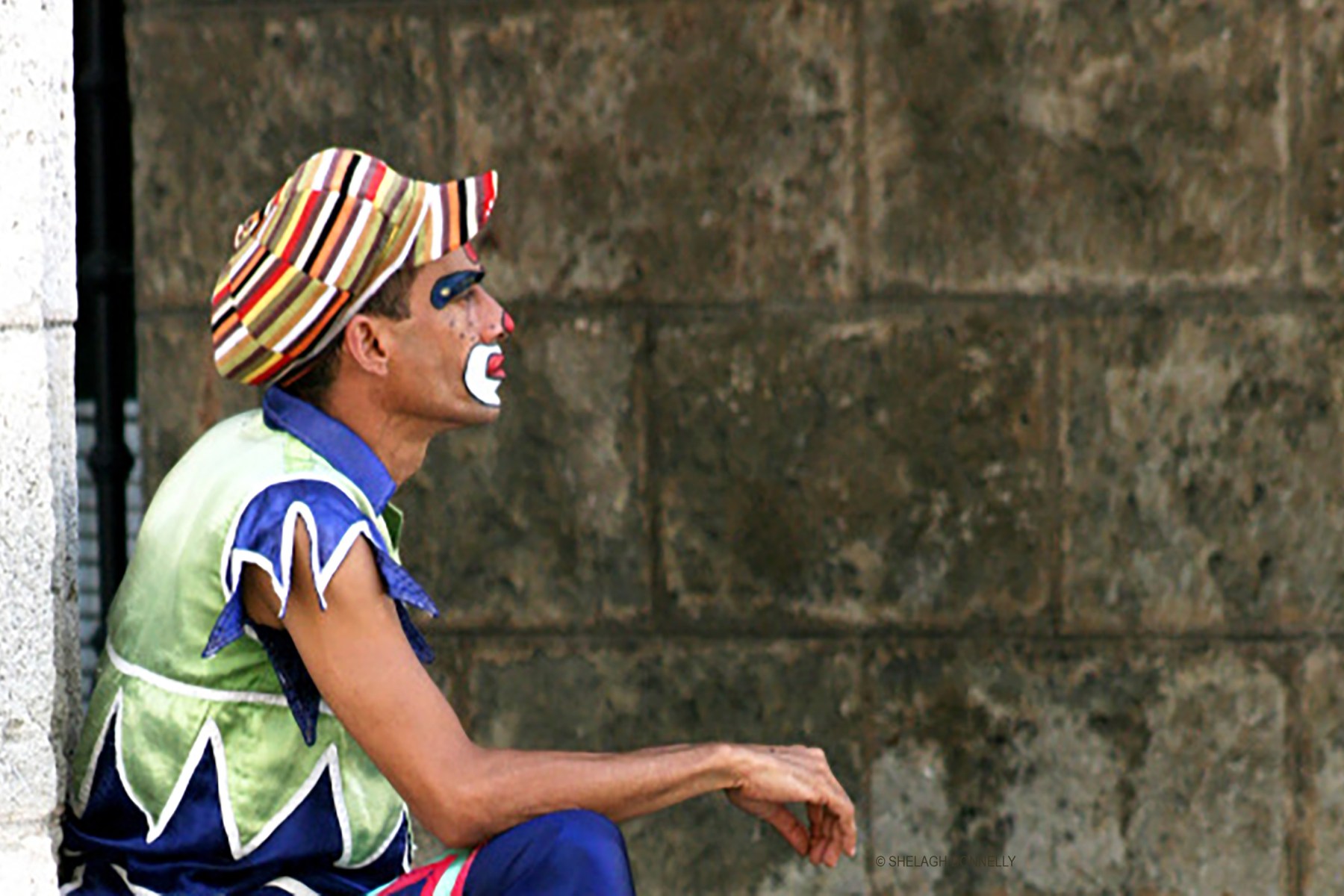
In Old Havana, by the Palacio Segundo Cabo, this man worked his way about the square, entertaining tourists and local school children alike. This was no mean feat given his stilts and the uneven condition of the walkways in Havana.
After some time in the mid-day heat, he made his way apart from the crowd and into this shady nook. There, he took his weight off the stilts for a few moments and a well earned break.

Share this post, and Shelagh's Lens, with others who love to travel

All Washed Up

… but these logs just off the shores of Jericho Beach, earlier this year, were still striking. Thinly wrapped with snow, they gleamed in the afternoon sunlight.

These mountain and water views are also pretty impressive.
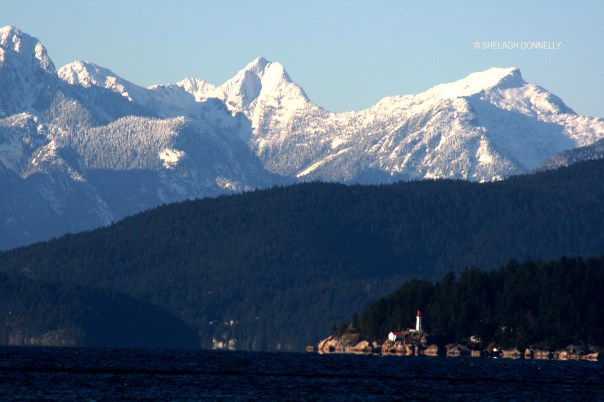
That’s Lighthouse Park dwarfed by the mountains, above, and below you have a couple of partial glimpses of what we call Sleeping Beauty.
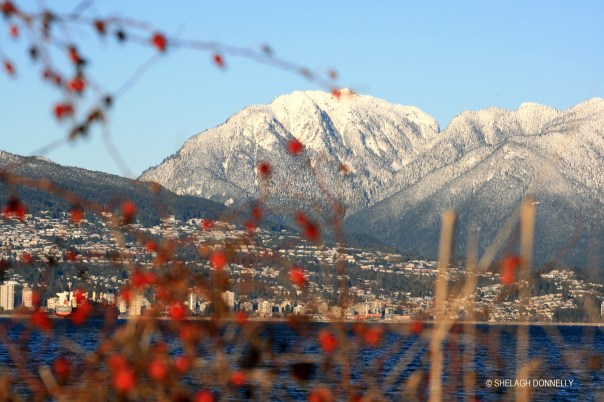
Think of the fairy tale princess lying down, arms folded across her chest. At Jericho Beach or Spanish Banks, look across the waters and upward, and you have nature’s version of Sleeping Beauty’s profile in repose.

Share this post, and Shelagh's Lens, with others who love to travel

Working the Malecón: Havana, Cuba
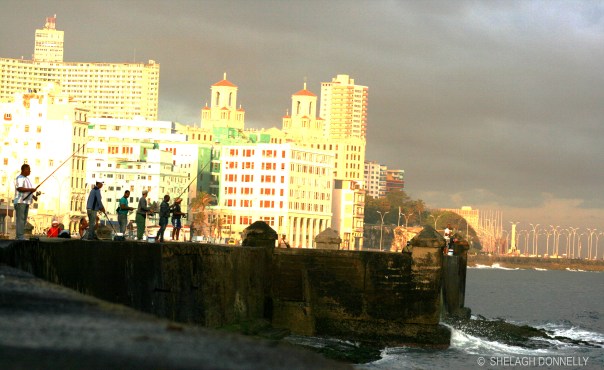
In Havana, you’ll find people clustered here and there on the Malecón night and day. You can walk or run along the gently curving seawall, as long as the waves don’t flood the surrounding neighbourhood, as they did a week or so before I took these photos. I was going to say that you can easily walk or run the seawall but you’ll want to be aware, especially in the evening, that it’s in pretty choppy condition in many spots.
The Malecón winds eight kilometers / almost five miles, hugging Bahia de la Habana … also known as the Bay of Havana. Construction began in Old Havana in the early 1900s and ultimately extended through Centro Havana and through to Vedado, which is the university and business district.
Running or strolling the Malecón is one thing; getting there means crossing the six-lane highway that separates the bay from the neighbourhoods. You don’t have traffic lights, and the traffic moves quickly, except on those occasions when the waves are so strong that the street is closed to vehicles.
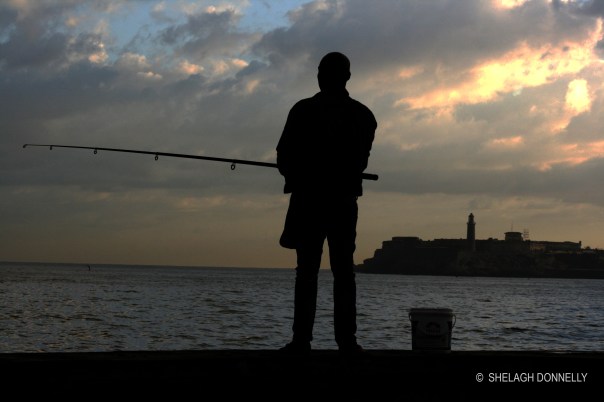
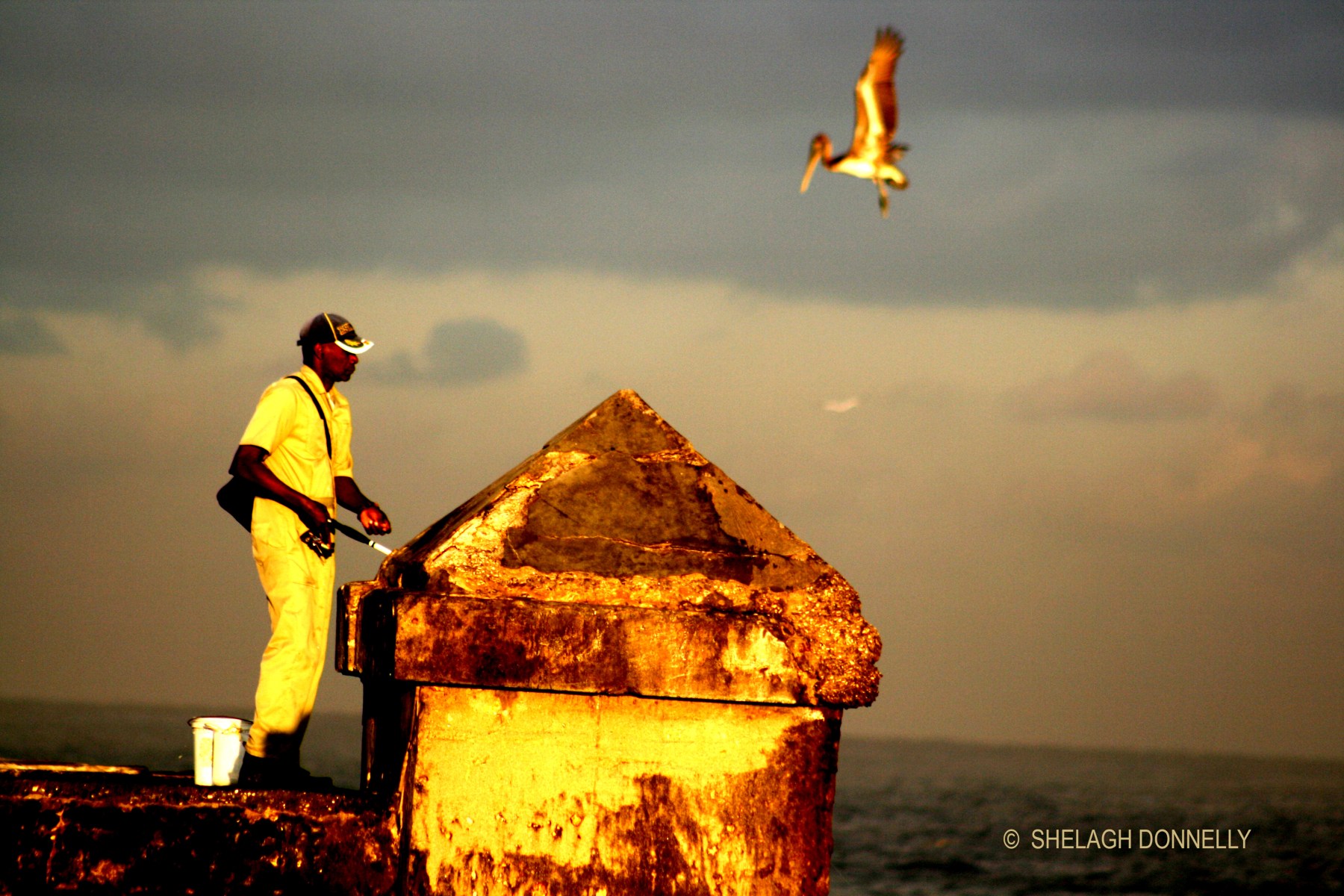
Walking from my casa particular (a private home in which the owner rents out rooms) to the Malecón before 7:00 a.m. this particular morning, traffic was less of an issue than on other occasions. The fishermen were out, staggered at different spots along the wall.
I like the shot above, with this particular fisherman and his gear silhouetted while dawn was breaking over the famous El Morro (which means “rock”), also known as Morro Castle and as Castillo de los Tres Reyes Magos del Morro.
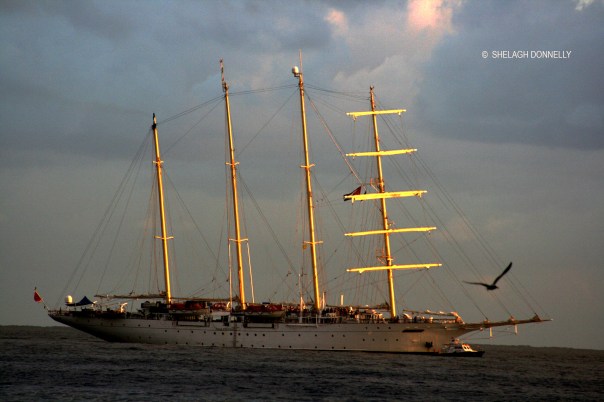
As the sun cut through the clouds, it lent gorgeous lighting to much in its path – including this boat’s masts, the pelican swooping nearby, and the fishermen below.
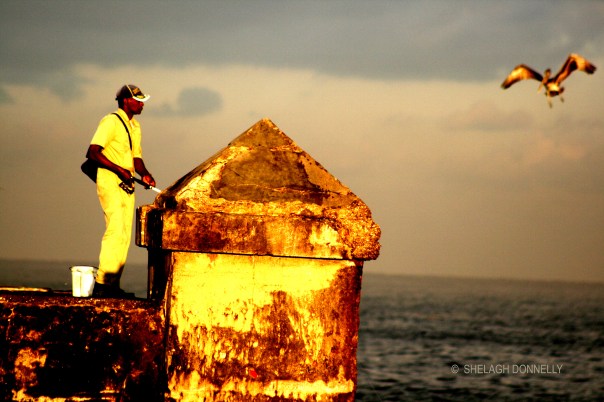
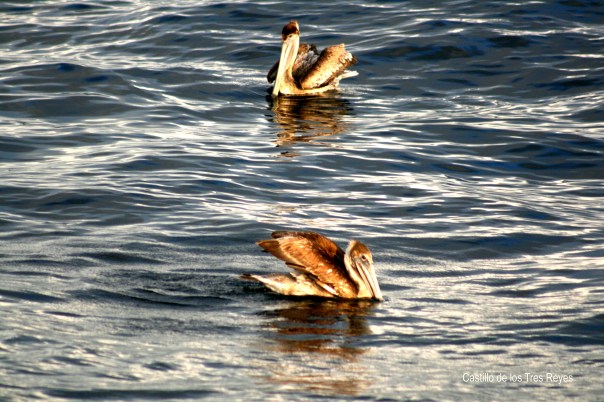
These pelicans were no dummies. They were constantly sweeping down to the waters where the fishermen cast their lines …
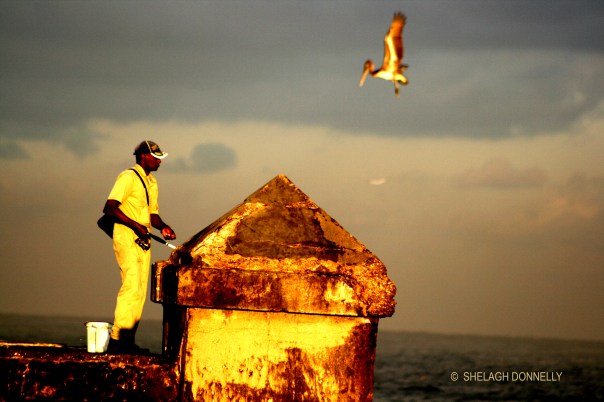
… and weren’t at all shy of those of us on land.
Here are a couple more shots of daybreak along the Malecón.
Share this post, and Shelagh's Lens, with others who love to travel

On the Balcony: Faces of Cuba
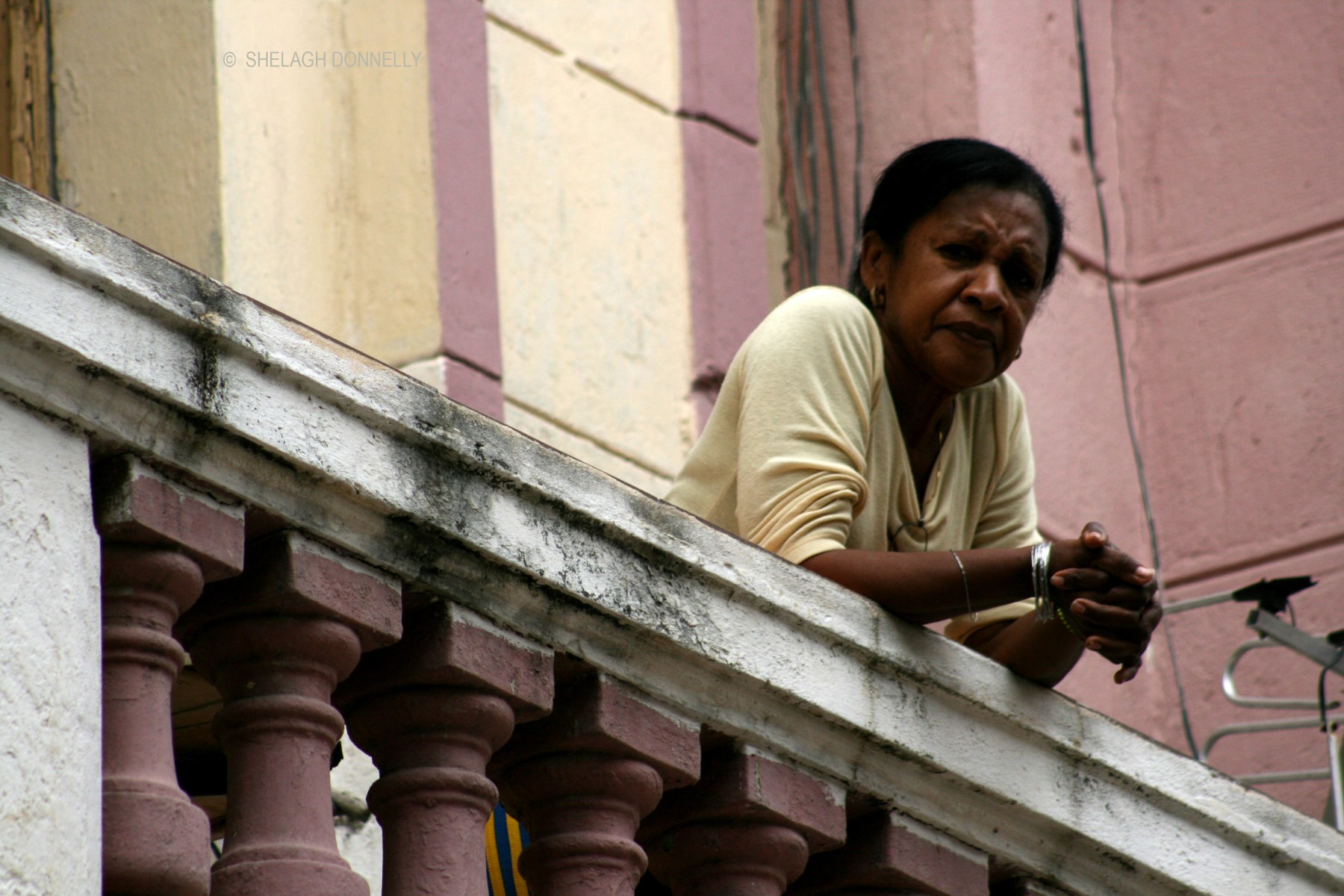
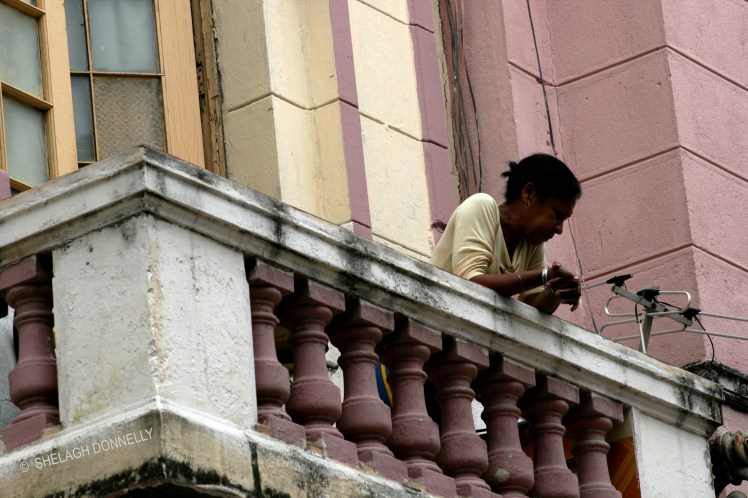
On Havana’s Boulevard de San Rafael, as in much of the city, you’ll find yourself in the midst of colourful old buildings with magnificently high ceilings on each level. In fact, I’d guess that the ground floor ceiling of the casa particular in which I stayed was at least 25′ / more than 7.5 metres high.
The streets are narrow and, while there are plenty of interesting sights at ground level, my eyes were constantly drawn upward. You’d see people on the second or third floor balconies of such buildings, making their way out from their suites to hang laundry, have a cigarette or conversation, or simply hanging over their balconies to watch what was going on down at street level.
I heard from more than one Cuban on this visit that, high ceilings or no, many people live in very limited quarters – and that it’s typical to find two or three generations of the same family living in one suite. Little wonder, then, that the balconies are so well populated. Right or wrong, I sensed that people were seeking reprieves from boredom (or something deeper) as they leaned over their balcony railings.
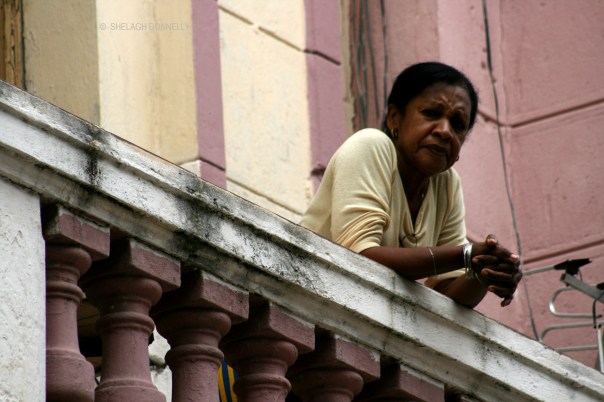
This woman first caught my interest for the simple fact that the gentle yellow of her sweater coordinated so perfectly with the paint colour on the exterior of the building.
We caught one another’s eyes. At least 50 or so feet below her, I lifted my camera in the air and, with a smile, gestured for permission to take her picture. She nodded her consent and, like so many people I encountered on this journey, posed with a most serious expression.
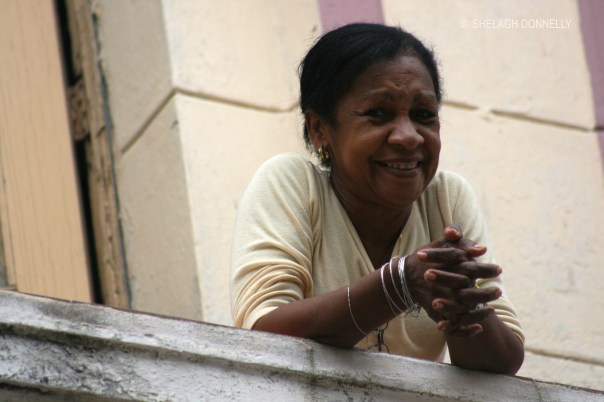
Once the honours were done, and I waved my thanks, she returned my appreciation with this lovely smile.
Share this post, and Shelagh's Lens, with others who love to travel

Little Girl With a Big Personality
It’s almost a couple of weeks since I returned from a first visit to Cuba, where anyone who loves photography is spoiled for options. You have the natural environment and colourful spectacles of cars as well as grand old buildings that are visual feasts, even (sometimes especially!) if they’re in decline. Last, but certainly not least, you have the people.

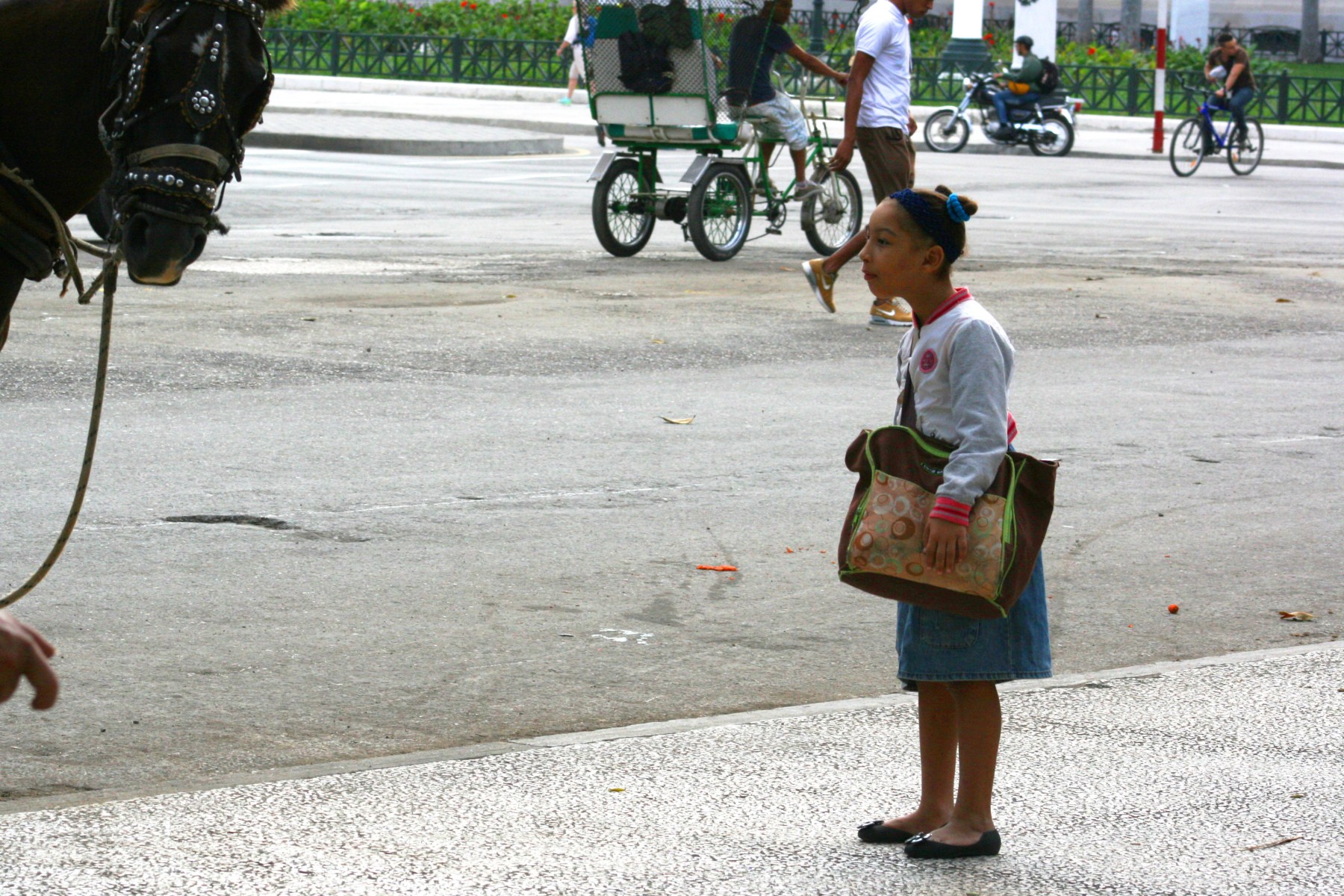
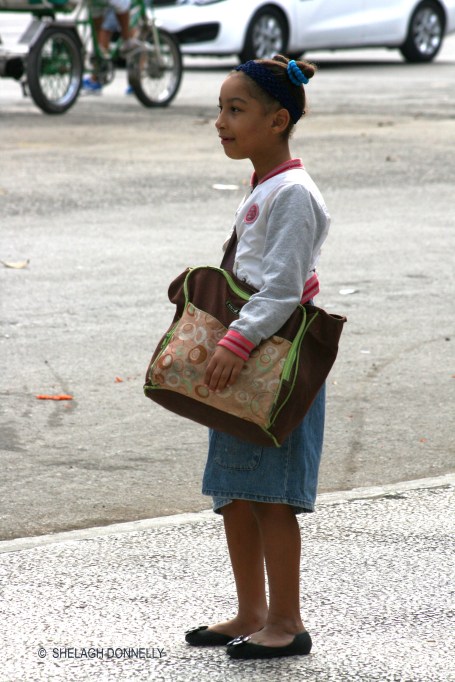
Take this little girl, whom I saw not far from Parque Central. What’s not obvious here is that her fascination – and conversation! – with this horse took place while her mother waited a few feet away, with a toddler and an infant.
While many of the school children I saw in Havana wore uniforms or matching scarves, that wasn’t the case with all of them. I think that this curious little one, complete with knapsack, was on her way home from class. Her mum had a toddler in hand, and an infant in a stroller … and was clearly accustomed to her eldest engaging with the world around her. Horses pulling buggies are not at all unusual sights on Havana’s streets, but it seemed that this schoolgirl was keen to strike up a somewhat cheeky conversation with the horse.
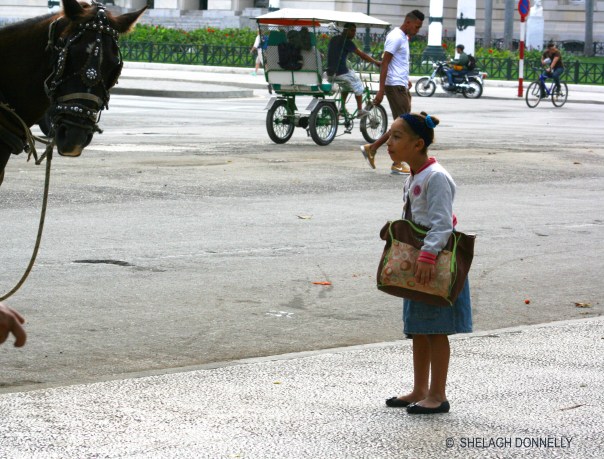
I speak no Spanish, apart from the most basic of courtesies, and am pretty sure the mum’s English was of the same caliber as my Spanish – but am also sure that whatever it was she called out to her daughter was the equivalent of, “Let’s get a move on.” While I was enjoying the exchange between the girl and the horse, and preparing to snap a shot, the mum and I caught one another’s eyes – and the smiles we shared spoke the language of parents all around the globe.


 Shelagh's Lens